Ege Erdemir
Looking for a HiWi job
← All work
2026Machine learning · Computer vision

Finding peoplethe size of afew pixels

Seen from a drone, a person can be smaller than 16 × 16 pixels. Standard detectors shrink the image before they look at it, so these people disappear. I trained detectors at a higher resolution and used sliced inference to find more of them.

Role
Independent project
Context
VisDrone benchmark, cloud A100 GPUs
Tools and methods
Python, Ultralytics YOLO11s, SAHI, NumPy, Jupyter
Year
2026
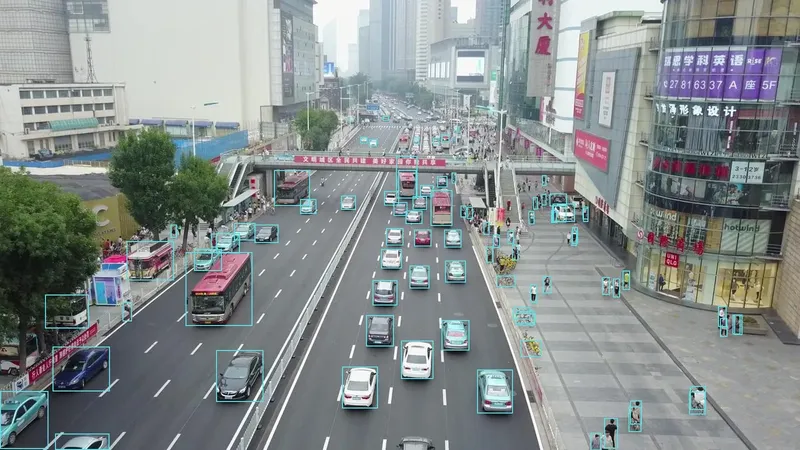
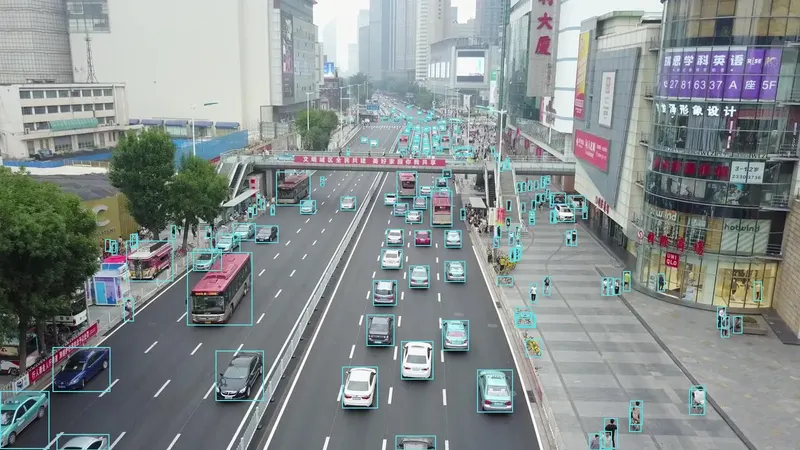
Detections from the model trained at 640 pixels Detections from the model trained at 1280 pixels
640 px · 84 found 1280 px · 162 found
VisDrone validation image · YOLO11s trained at 640 px vs. 1280 px · confidence ≥ 0.35 Drag to compare
Results
MeasureResultCompared with
mAP50, model trained at 1280 px 70.0 % 52.8 % when trained at 640 px
Recall on objects under 16 px, with sliced inference 24.4 % 6.5 % without slicing
Labelled objects checked before training 381,956 in 7,019 images
The problem

Small things vanish when you downscale

Object detectors such as YOLO usually resize every image to 640 pixels before they look at it. That is fine for a car filling a quarter of the frame. In drone footage, many of the objects are pedestrians and vehicles only a few pixels wide. After resizing, there is almost nothing left of them to detect.

The data

Cleaning before training

I regrouped the VisDrone dataset into four classes (person, small vehicle, light vehicle and large vehicle) and checked all 381,956 bounding boxes before training. Every image has a label file, every box lies inside the image, and there are no empty boxes or corrupt files.

Roughly half of all objects are small vehicles and a third are people.

The approach

More pixels, then smaller windows

First, a YOLO11s baseline trained at the usual 640 px. Then the same model trained at 1280 px on cloud A100 GPUs, so small objects keep four times as many pixels. Training at 1280 px raised mAP50 from 52.8 % to 70.0 %.

Second, sliced inference with SAHI: the image is cut into overlapping tiles, each tile is analysed at full resolution, and the detections are merged back. For objects smaller than 16 px, recall rose from 6.5 % to 24.4 %.

What I learned

Resolution mattered most

For tiny objects, training at a higher resolution gave the biggest gain. Recall on objects under 16 px is still only 24.4 %, so most of the very small objects are still missed.

Next project Hydrogels that heat up on command →